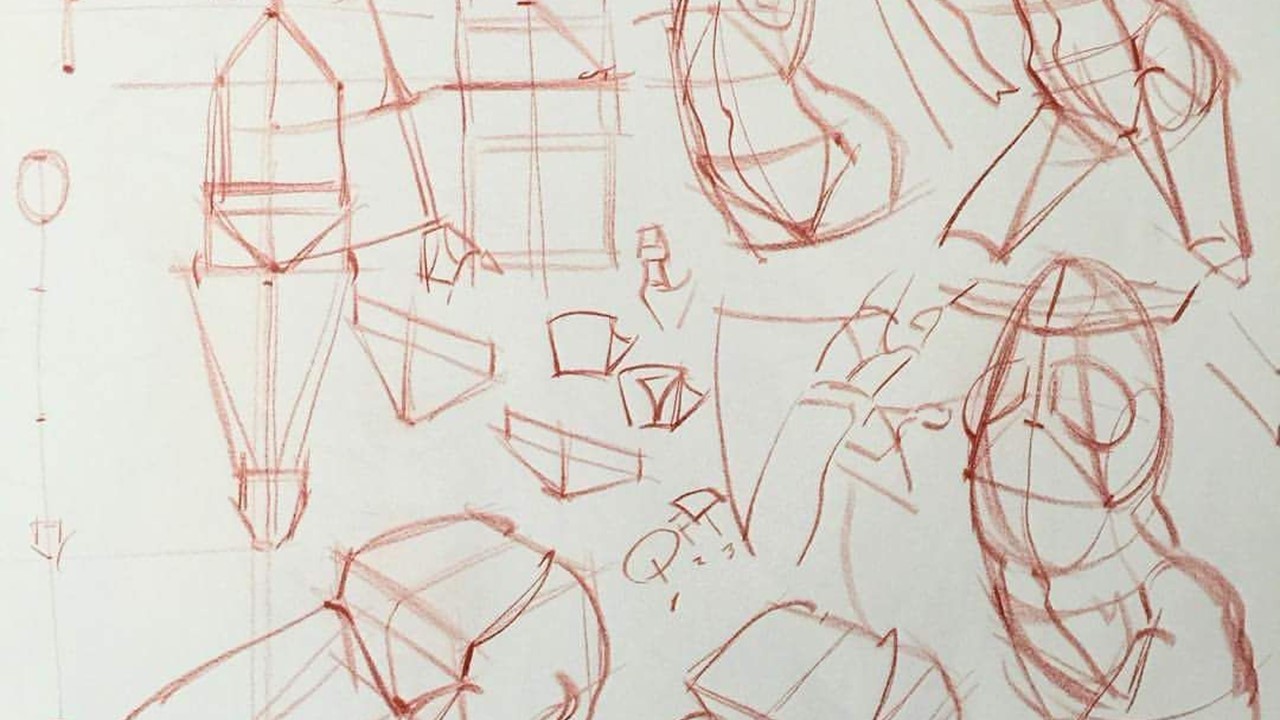
If you’re walking through the paper aisle of the art store for the first time, you can easily become overwhelmed by the vast selections. When selecting your drawing paper, consider
a few general issues:
✓ You need to choose between individual sheets of paper and drawing pads.
✓ You need to make sure you select the appropriate size of drawing paper.
✓ You want to be selective with the weights and textures of paper that you work on.
I explain what you need to know in the following sections.
Individual sheets versus drawing pads Most stores offer paper in individual sheets. Still, I find that these products are usually specialty papers that are not only more expensive but also large (up to a whopping 23 x 29 inches) and cumbersome to carry out of the store. You can have a store employee cut them down to a specified size, but that’s really not worth the effort or cost (talk about a nasty pay-per-cut)! For this reason, I buy my drawing paper in pads. The pads are cheaper and easier to store and organize in my drawing archives cabinet. (I discuss archiving supplies later in this chapter.) Most pads come with a strong cardboard backing and a thick front paper jacket, which protects your drawing of the day.
As you develop your figure-drawing skills, you may want to try a certain quality of drawing paper sold only in individual sheets. When you do, ask the store staff to roll and wrap the sheet of paper so it isn’t damaged on your way back to the studio. If you don’t have immediate plans to use the paper, unroll it and store it flat (a few things are more frustrating than trying to draw on paper that curls up on your hand like a Venus flytrap). And don’t waste the wrapping paper; use it for sketches!
Talk to the store manager or an employee if you desperately want to test a sheet of paper from a drawing pad. Stores usually have a small test pad set aside for customers to scribble on before committing to purchasing the entire pad.
 The Art of Richard Romero