Despite all those stockpiles of paints, canvases, brushes, turpentine, and so on at the art store, the essential materials you need to start drawing the figure are only a pencil and paper.
But wait, the good news doesn’t stop there! Unlike paints and brushes, whose costs can add up to hundreds of dollars, a basic assortment of drawing tools is inexpensive.
If you’re currently in a figure-drawing session, you don’t need to purchase all the materials I describe in this chapter (getting the in-class recommended supplies is sufficient). You can always come back to this chapter for additional supplies when trying a different type of medium.
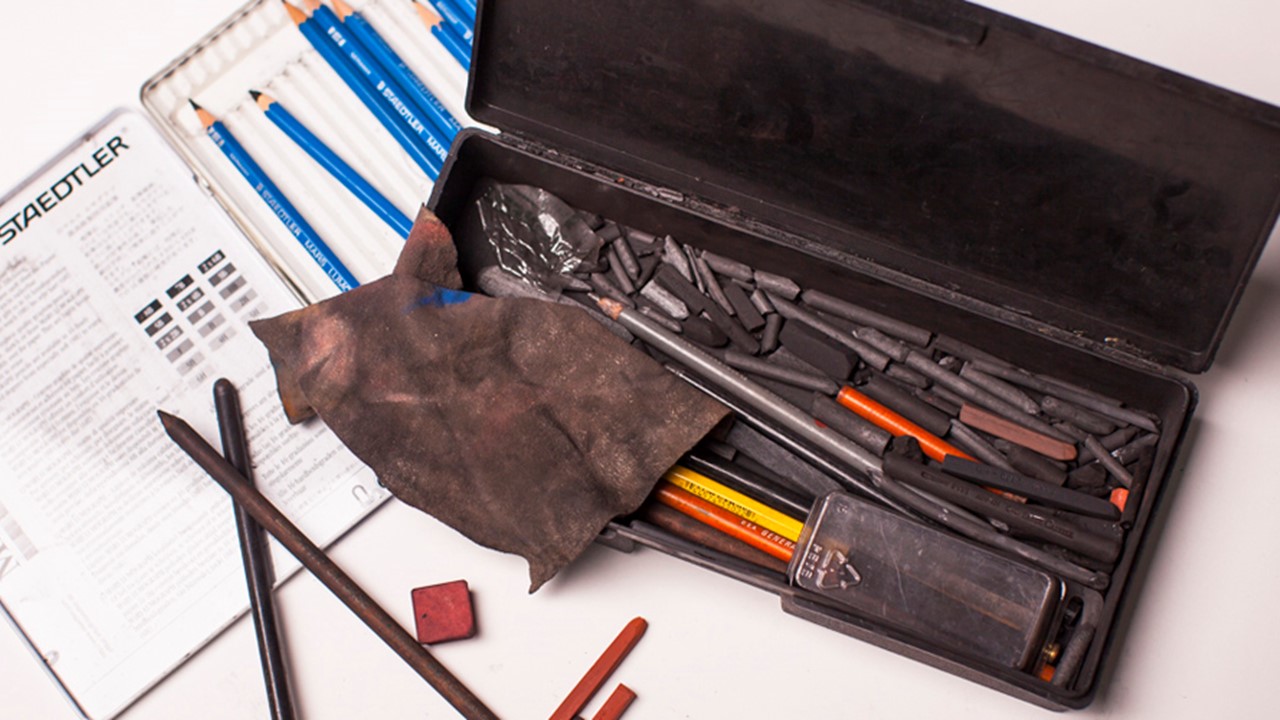
The following list provides some facts about life that may affect a professional or student artist’s spending habits:
✓ Growing pains: When starting out, you may stick with paper, a few different pencils, an eraser, and other essential tools. As your individual drawing style/skills advance, however, you may find that the pencils you once liked no longer suit your needs. You may need to bite the bullet and buy new pencils or other supplies you’ve outgrown.
✓ Consistency issues: Although you like to think that the specific brand of paper you’re buying today is the same quality as the one you bought last week, that’s not always the case. You don’t want to be stuck with a subpar stack of paper. So, be prepared to restock supplies that are of lower quality than you want.
✓ Accountability: Simply buying more doesn’t necessarily make me more accountable for my belongings. In fact, from past experience, I find it makes me even more carefree. Looking back, I realize that if I’d been more careful with my supplies, I could’ve spent my money on newer/fancier materials instead of replacing the basic stuff I lost. When you buy fewer supplies, you value them more. That’s one incentive for sticking to a tight budget!
✓ Referrals: Most of the materials I currently use have been referred to me by other artists and colleagues. Make sure you leave some room in your drawing bin for new recommendations — after you’ve been drawing for a while, set aside a little spending money so you can experiment with new supplies.
✓ Overdependence: Sad but true — some brands simply go out of business (it’s a tough, competitive market). You don’t want to become too reliant on a single brand and not know how to adapt to products from a different brand when your favorite product is gone. Be prepared to spend more money to replace a discontinued brand you love;
you’re in luck if you find replacements that cost less than the originals!
✓ Intimidation: When selecting paper as an art student, I remember feeling intimidated by trying new techniques on expensive paper, such as thick-ply Bristol. Although setting the good paper aside and using the cheaper drawing paper for experimentation is wise, sometimes your experiments will work best with thicker, better-quality paper (newsprint, for example, can’t withstand water or intense pressure from drawing pencils unless the lead is soft). I recommend having a small “experiment” pad set aside
expressly for these purposes (8-x-10-inch smooth Bristol will suffice). Be careful, especially with newsprint brands, whose quality deteriorates over the course of a short time (as early as just a few days!).
 The Art of Richard Romero